
If you’ve ever admired a workout plan, maybe even felt a little envious, but then never started it, you’re not alone.
Fancy programs can seem inspiring, but real life often gets in the way.
With work, kids, errands, travel, and all the little things that fill your week, most fitness plans never start because they expect perfect conditions. They want you to find lots of time, stay highly motivated, or be consistent every single day.
But real life usually doesn’t work that way.
Here’s the truth:
You don’t need a perfect program. You just need movement that fits into your real life.
That’s where habit stacking can really help.
Why Habit Stacking Works Better Than “Perfect Plans”
Most traditional fitness programs don’t work because they try to fit your life into a strict schedule.
Habit stacking is different. It builds on what you already do and adds simple movement habits to your daily routines.
So instead of asking yourself:
- “When am I going to find an hour to train every day?”
Try asking:
- “What can I add to what I already do?”
When you add habits to things you already do, they become part of your routine instead of just another task.
For example:
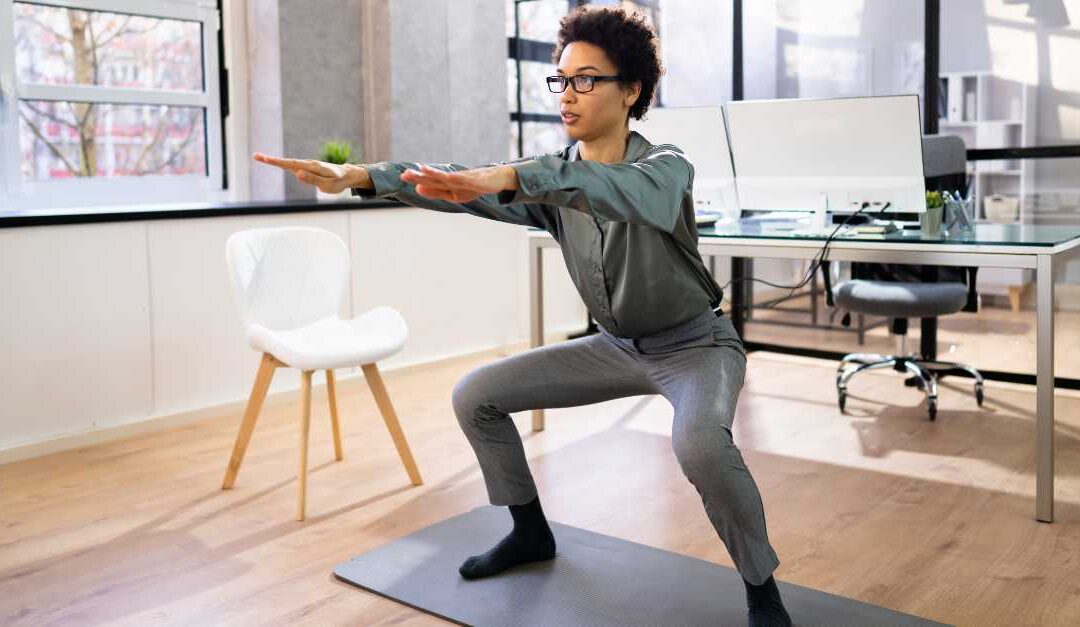
- After I brush my teeth in the morning → do 10 squats
- When the coffee is brewing → do calf raises
- When I get up from my desk → do a 30-second wall sit
- After lunch → walk for 5 minutes
- These movements are tiny and simple, but you do them regularly.
Here’s the surprising part:
Small movements, done regularly, add up to real change over time.
It’s not about how big the movement is, but how often you do it.
What Habit Stacking Looks Like in Real Life
The Parent With Little Time
If your days are busy and you keep putting off your fitness goals, habit stacking can help you fit movement into your day without needing extra time.
For example:
- The moment your kid finishes an online class → drop and do a 20-second plank
- Every time you walk through a doorway → 10 heel raises
- When you wait for the microwave → 15 jumping jacks
- Before you sit down at your desk → 30-second breathing + posture reset
None of these needs you to plan a workout. They simply build on what you’re already doing.
Movement stops feeling like a chore and just becomes part of your day.
The Desk Worker With Stiff Back
If you sit all day, you don’t need a gym membership to start feeling better.
Try this stack:
- Every time you stand up → do 8 shoulder rolls
- Every time you refill your water → do calf raises
- Every time a meeting starts → do a 1-minute mobility stretch
These are small changes you’ll notice right away, and they don’t require a big time commitment.
A Simple Habit Stacking Framework You Can Try Today
Here’s a simple way to make your own habit stacks:
- List your daily anchors
These are things you already do every day (brush teeth, get coffee, pick up the phone, walk to the kitchen). - Choose a small movement to attach
Don’t choose a full workout, just a small movement (2 to 10 reps, or about 30 seconds). - Stack it so it’s automatic
Always do it right after your anchor. No decisions or planning needed; it just becomes automatic. - Track it lightly
A quick checkmark in your notes app or a habit tracker can help you build momentum.
For Example:
| Daily Anchor | Movement to Attach |
| After brushing teeth | 10 squats |
| Whenever coffee brews | 15 calf raises |
| Every meeting start | 30-second stretch |
| When you get up from desk | 10 arm circles |
This isn’t about working harder. It’s about being consistent.
Mini Challenges You Can Try This Week
Here are a few stacks you can try right now, and you don’t need a gym:
Energy Boost Stack
- After every bathroom break → 20 calf raises
- After every phone call → 10 shoulder rolls
- After lunch → 5-minute brisk walk
Strength Starter Stack
- After brushing both morning and night → 10 squats
- Every time you stand from your chair → 8 lunges
- Before dinner → 30-second plank
Stretch & Reset Stack
- On screen breaks → 30-second neck stretch
- When you refill water → shoulder openers
- Before bed → 2 minutes of gentle breathing + mobility
Choose one stack category and try it for a week. You’ll see that small, regular movement is easier to stick with than any perfect program.
The Big Takeaway
You don’t need a perfect workout plan to get fitter.
You don’t need to set aside hours just for exercise.
You just need small, intentional movement habits that fit into your life as it is now.
Consistency isn’t about how much you do.
It’s about doing it regularly and making it part of your routine.
Habit stacking is simple.
But it’s real and effective.
And it really works.

